

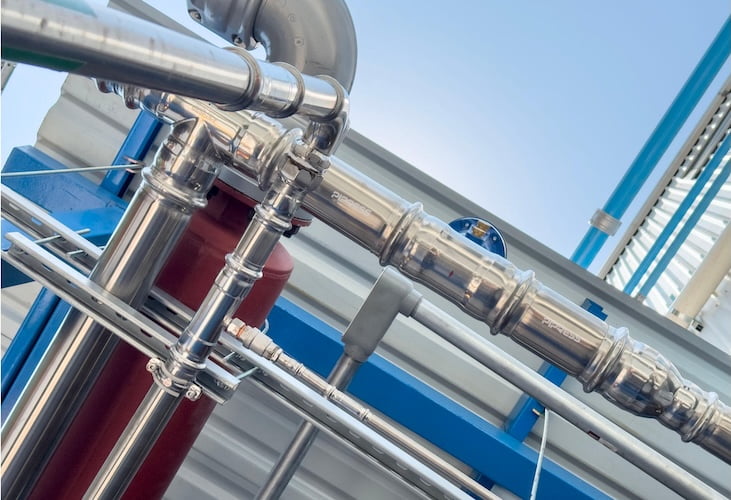
The Rising Popularity of Stainless Steel Pipes and Press Fittings Across Industries
Introduction
In the modern industrial landscape, the choice of materials for piping systems plays a critical role in ensuring efficiency, safety, and longevity. Stainless steel pipes, known for their robust composition of iron, chromium, and other alloys, offer exceptional resistance to corrosion and high temperatures. Press fittings, a type of mechanical connector, allow for quick, tool-based joining of these pipes without the need for welding or threading, reducing installation time and labor costs. Over the past decade, these components have surged in adoption across various sectors, driven by technological advancements, regulatory demands, and economic factors. This essay argues that stainless steel pipes and press fittings are becoming increasingly popular in diverse industries, as evidenced by market growth data, their superior performance attributes, and widespread applications in fields such as plumbing, oil and gas, chemical processing, food and beverage, and pharmaceuticals.
Market Growth Indicators
The global market for stainless steel pipes and press fittings provides compelling quantitative evidence of their rising popularity. For instance, the stainless steel press fittings market was valued at USD 2.47 billion in 2024 and is experiencing robust expansion. Similarly, the broader pipe fittings market, which includes significant stainless steel segments, reached USD 16,394.9 million in 2024 and is projected to grow to USD 25,021.2 million by 2030, at a compound annual growth rate (CAGR) of 7.3%. In the plumbing-specific subcategory, the stainless steel plumbing pipes and fittings market is estimated at USD 4.93 billion in 2024, expected to reach USD 5.95 billion by 2030 with a CAGR of 3.19%, fueled by increased construction and renovation activities. Another report highlights the stainless steel plumbing pipes market growing from USD 9.09 billion in 2024 to USD 12.97 billion by 2030, at a CAGR of 5.95%. These figures underscore a clear upward trajectory, reflecting heightened demand as industries prioritize durable and efficient piping solutions over traditional alternatives like copper or PVC, which often suffer from shorter lifespans and higher maintenance needs.
Advantages Driving Adoption
The popularity of stainless steel pipes and press fittings stems largely from their inherent advantages, which address key pain points in industrial operations. Corrosion resistance is paramount; the chromium content in stainless steel forms a passive oxide layer that protects against rust and degradation, making it ideal for environments exposed to moisture, chemicals, or extreme pH levels. Press fittings enhance this by offering leak-proof connections through a simple crimping process, eliminating the risks associated with soldered or welded joints, such as heat damage or skilled labor shortages. This results in installation times reduced by up to 50% compared to traditional methods, lowering overall project costs. Additionally, their durability under high pressure and temperature variations ensures reliability in demanding applications, while hygienic properties prevent contamination, aligning with stringent health and safety regulations. These benefits have led to a shift away from less resilient materials, particularly in sectors where downtime can be costly.
Applications in Diverse Industries
Plumbing and Construction
In residential and commercial plumbing, stainless steel pipes and press fittings are gaining traction due to their longevity and ease of use in water supply, drainage, and HVAC systems. The market’s growth in this sector is driven by urbanization and remodeling projects, with stainless steel’s corrosion resistance making it preferable for potable water lines where purity is essential. For example, in hot and cold water distribution, press fittings provide quick, reliable connections that comply with building codes, contributing to the segment’s dominance in overall market share.
Oil and Gas Sector
The oil and gas industry relies heavily on stainless steel for transporting hydrocarbons and petrochemicals safely over long distances. Press fittings are particularly valued here for their ability to handle high-pressure oil lines and industrial gases without failure, reducing the risk of leaks in offshore and onshore operations. As global energy demands rise, investments in infrastructure have boosted adoption, with stainless steel’s resistance to corrosive substances like sulfur compounds extending asset life and minimizing environmental hazards.
Compressed Air and Industrial Air Fluids
Nowadays, compressed air requires not only high quality and efficiency compressors, but also requires critically for super performance of piping systems. More and more customers realize that to reduce energy cost and improve production effeciency, a stable and reliable piping system with stainless steel pipe and press fittings could help them huge. The low installation cost and maintenance-free factors allow PiPress piping system the great choice for industrial fluids.
Chemical Processing and Pharmaceuticals
Chemical plants benefit from stainless steel’s tolerance to aggressive chemicals and extreme temperatures, where it is used in processing lines and storage systems. Press fittings facilitate rapid assembly in these environments, ensuring non-reactive surfaces that prevent product contamination. In pharmaceuticals, hygiene is critical; stainless steel’s smooth, non-porous surface inhibits bacterial growth, making it the material of choice for drug manufacturing and sterile water systems. The sector’s emphasis on regulatory compliance has accelerated its shift toward these fittings.
Food and Beverage Industry
Food processing demands materials that maintain product integrity and meet food safety standards. Stainless steel pipes and press fittings are increasingly used for conveying liquids like milk, beverages, and oils, thanks to their sanitary properties and ease of cleaning. Press systems allow for modular designs in production lines, enabling quick modifications without compromising hygiene. This has led to widespread adoption in breweries, dairies, and processing plants, where traditional materials might harbor contaminants.
Other Emerging Applications
Beyond these, stainless steel press fittings are finding roles in marine environments for their saltwater resistance, compressed air systems in manufacturing, and even fire suppression lines due to their fire-resistant qualities. In heating and cooling systems, they support efficient energy transfer, aligning with sustainability goals in green building initiatives.
Conclusion
The evidence from market analyses and industry applications clearly demonstrates that stainless steel pipes and press fittings are not only becoming more popular but are poised to dominate piping solutions in the coming years. With projected CAGRs ranging from 3.19% to 7.3% across segments, their growth outpaces many traditional materials, driven by unmatched durability, installation efficiency, and adaptability to harsh conditions. As industries continue to prioritize sustainability, safety, and cost-effectiveness, the transition to these advanced systems will likely accelerate, reshaping infrastructure worldwide. This trend highlights the material’s versatility and positions it as a cornerstone of modern engineering.